


A Brief and Unusual Chapter in U.S. Coinage
The Twenty-Cent Piece stands as one of the most unusual denominations in United States history. It entered circulation with promise. However, it failed almost immediately.
The United States Mint struck the coin from 1875 through 1878. Yet, the Mint released it for circulation only in 1875 and 1876. After that, officials stopped distributing the denomination.

During its final two years, the Mint produced just 1,100 Proof coins. Collectors purchased these directly, rather than receiving them in circulation.
As a result, the Twenty-Cent Piece holds one of the shortest production runs and lowest mintages in U.S. history.
Mintage Figures and Key Issues
The Twenty-Cent Piece came from three facilities:
- Philadelphia Mint
- Carson City Mint
- San Francisco Mint
In 1875, the Mint expected strong export demand. Therefore, San Francisco struck 1,155,000 coins. Meanwhile, Carson City produced 133,290 pieces, and Philadelphia added 38,500 examples.
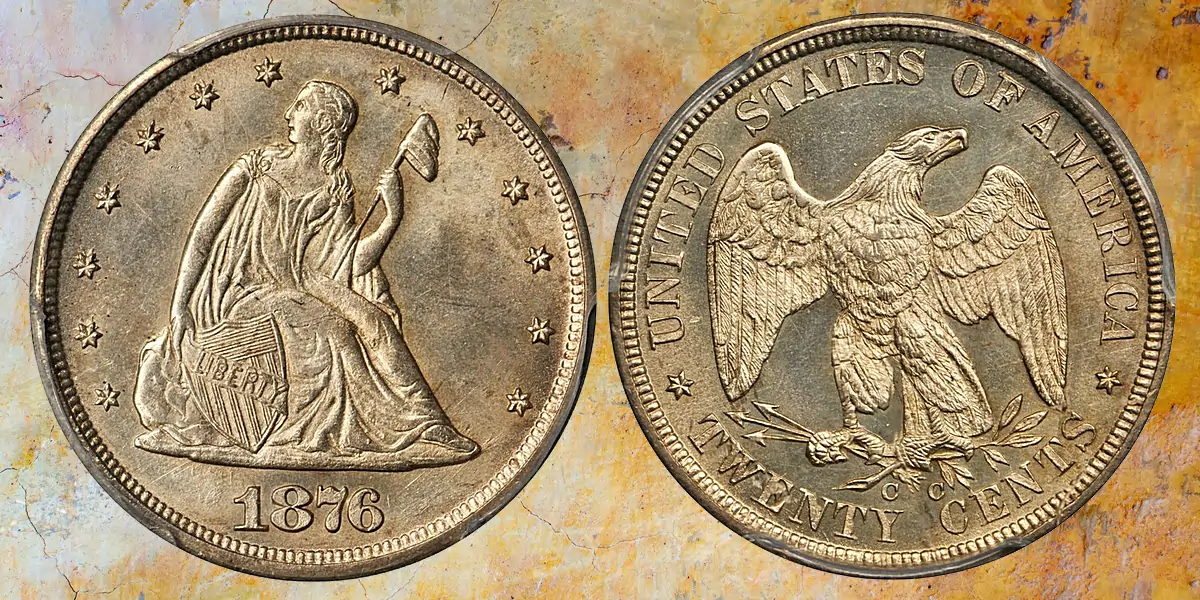
Fortunately, many 1875-S coins survived. Today, collectors often find them in Extremely Fine to Mint State grades. This availability makes the 1875-S an affordable type coin.
By contrast, the 1876-CC issue tells a very different story.
The Carson City Mint struck 10,000 coins dated 1876. However, officials melted nearly all of them before release. Today, experts estimate that fewer than 20 examples survive. This rarity makes the 1876-CC one of the most coveted coins in the series.
Why Create a Twenty-Cent Coin?
At first glance, the denomination seems unnecessary. After all, the quarter dollar already existed.
However, the story begins with the Coinage Act of 1873. This law ended the free coinage of silver. As a result, lawmakers looked for new ways to use silver in coinage.
In 1874, Congress approved the Twenty-Cent Piece. John Percival Jones strongly supported the measure. He argued that the coin would compete with European silver coins used in international trade, especially those aligned with the Latin Monetary Union.
Additionally, Congress saw another benefit. The western United States faced a shortage of small change. The Mint had ended the half dime in 1873. At the same time, the cent and five-cent nickel came only from Philadelphia. Therefore, western states needed more fractional coinage.
Design Problems and Public Confusion
Despite good intentions, the coin failed in execution.
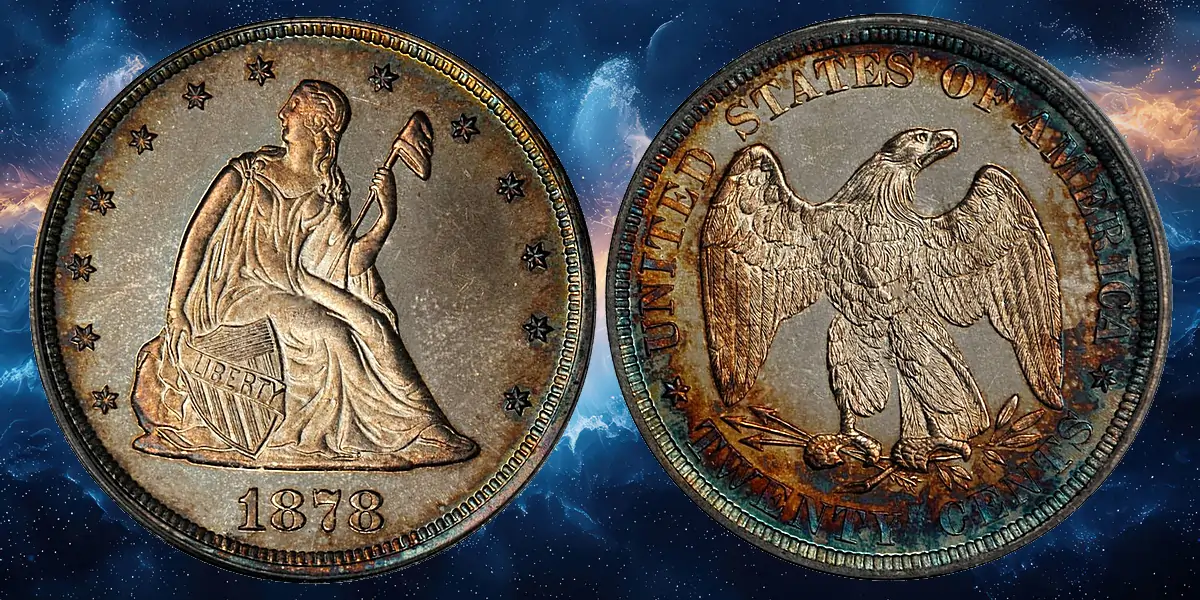
Chief Engraver William Barber designed patterns at the request of Mint Director Henry Linderman. The final coin featured the familiar Liberty Seated design on the obverse. The reverse displayed a similar eagle to that found on the quarter.
This similarity caused a major problem.
The Twenty-Cent Piece looked too much like the quarter dollar. Both coins shared nearly identical designs and similar sizes. While the Twenty-Cent Piece had a plain edge, the quarter used a reeded edge. However, circulation wear often reduced the reeding on quarters. As a result, many people struggled to tell the coins apart.
Because of this confusion, the public rejected the denomination.
A Short-Lived Experiment Ends
The Twenty-Cent Piece never gained acceptance. Consequently, the Mint stopped striking coins for circulation after just two years.
Today, the denomination remains a fascinating “what-if” in American numismatics. It reflects both economic ambition and design missteps. Moreover, it offers collectors a mix of affordable type coins and extreme rarities.
In-Depth Twenty-Cent Piece Date Analysis by CoinWeek Notes
Key Specifications at a Glance
Denomination: Twenty-Cent Piece
Years of Issue: 1875–1878
Circulation Strikes: High: 1,155,000 (1875-S) Low: 106,000 (1876-CC)
Proof Coinage: High: 1,200 (1875) Low: 510 (1877)
Alloy: 90% silver, 10% copper
Weight: 5.0 grams
Diameter: 22.0 millimeters
Edge: Plain
Designer: William Barber
The post Twenty-Cent Piece, 1875-1878 | CoinWeek appeared first on CoinWeek: Rare Coin, Currency, and Bullion News for Collectors.