


This Rare Cyzicus Stater Links Sea Power, Sacred Mystery, and Ancient Trade
Ancient coin auctions do not often offer a piece that can stop even seasoned collectors in their tracks. This Cyzicus electrum stater does exactly that. GreatCollections has listed this electrum stater from ancient Cyzicus in Mysia, dated to the 5th-4th centuries B.C. This coin weighs 16.01 grams. NGC graded it Choice Very Fine, with Strike 4/5 and Surface 4/5. GreatCollections describes the type as “remarkably rare and potentially unique.” The Great Collections sale will take place on April 12th. Mark your calendars!
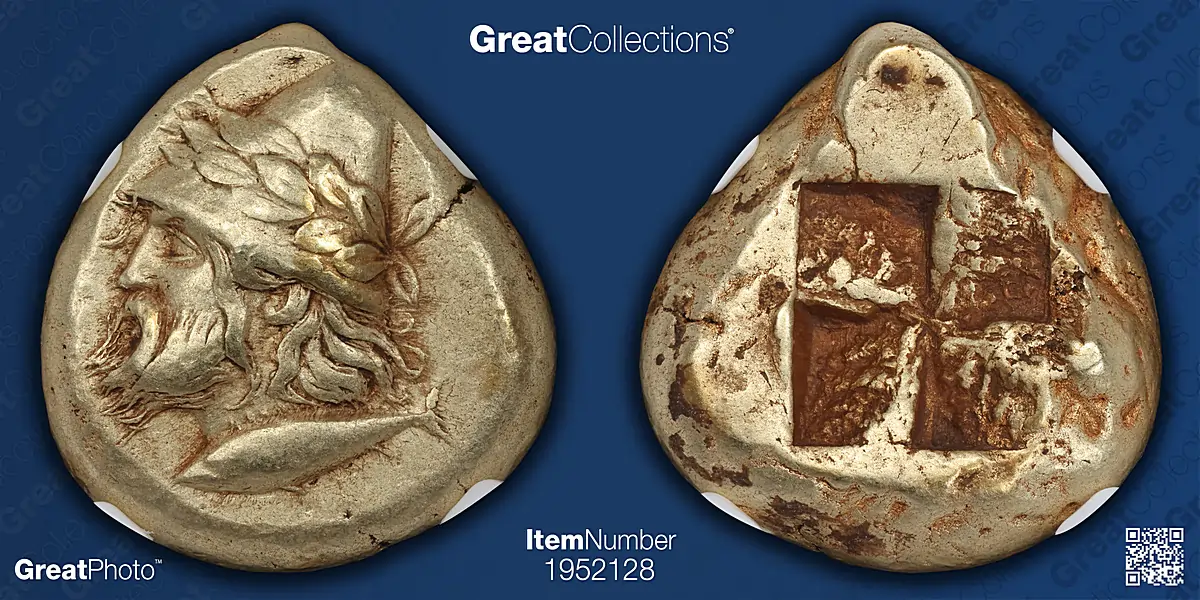
The appeal starts with the obverse. The catalog identifies the portrait as a bearded head of Cabeirus wearing a laureate pileus, with a tunny fish below. The reverse carries the familiar quadripartite incuse windmill punch. Yet the real fascination lies deeper. This coin does not only show a rare type. It also opens a window into one of the most inventive and commercially important coinages of the ancient Greek world.
A Great Port Produced a Great Coinage
Cyzicus stood on the southern coast of the Sea of Marmara in what is now northwestern Turkey. Its position gave the city early commercial importance. Founded as a Milesian colony, Cyzicus sat on a key maritime route between the Aegean and the Black Sea. That location shaped its wealth, its identity, and its coinage.
As a result, the city’s electrum staters traveled widely. Cambridge notes that, from the second half of the fifth century through most of the fourth century BCE, Cyzicene staters were the most prominent currency in the Black Sea area. They also appear in Athenian financial records, temple inventories, and literary sources. In other words, these staters did real work in major regional trade. They were not ceremonial curiosities. They were money with reach.
Why Electrum Still Mattered at Cyzicus
That commercial role makes Cyzicus even more interesting. Many Greek mints moved toward separate gold and silver coinages. Cyzicus, however, continued to strike electrum. That choice gave its coinage a distinctive identity. It also linked the city to one of the oldest traditions in ancient money.
Just as important, Cyzicus refused to become visually predictable. The mint produced a long and varied series of obverse types. CoinWeek notes that Cyzicus used the tunny fish as its civic badge and became famous for the variety of its designs. That creative range helps explain why rare portrait types still excite collectors today. Each issue feels like a fresh statement from the mint, not a routine repetition.
The Tunny Fish Told the Story of the City
The small fish below the portrait carries major meaning. On Cyzicene coinage, the tunny fish served as the civic badge. That symbol mattered because many Cyzicene coins did not carry lengthy inscriptions. The badge told the viewer where the coin came from. At the same time, it pointed back to the city’s maritime economy. Cyzicus built real prosperity on the sea, and the tunny fish made that identity impossible to miss.
So the design works on two levels at once. First, it marks the mint. Then, it reinforces the city’s economic power. That pairing gives the coin unusual clarity. The image is small, but the message is large. Cyzicus wanted its money to carry the image of trade, abundance, and civic confidence.
A Portrait with Mystery and Debate
The portrait makes this stater stand out. GreatCollections identifies the head as Cabeirus. That attribution fits the coin’s atmosphere of cult and mystery. Britannica describes the Cabeiri as deities connected to a mystery cult that included fertility, purification, and initiation. Those associations make the type more than decorative. They suggest that the coin drew on beliefs that carried deep local and regional meaning.
Even so, this kind of head has long invited debate. Numismatic scholars have not always agreed on every related portrait from Cyzicus and nearby mints. That uncertainty does not weaken the coin. In fact, it adds another layer of fascination. Collectors do not simply see a face. They confront a real question from ancient religion and modern scholarship. That tension gives the piece a richer backstory than most auction coins ever receive.
Fine Style, Strong Identity, and Real Rarity
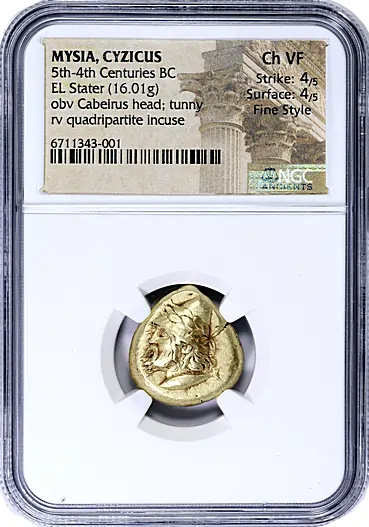
GreatCollections also highlights the coin’s fine style, and that claim rings true. The portrait carries presence. The pileus creates an unmistakable silhouette. Meanwhile, the tunny fish anchors the image in the civic identity of Cyzicus. Then the reverse returns the viewer to the old, formal language of archaic and classical Greek minting with its quadripartite incuse punch.
That blend gives the stater its power. It feels refined, yet ancient, local, yet international, and feels compact, yet full of history. GreatCollections calls the type remarkably rare and potentially unique, and that alone would command attention. However, the deeper attraction lies in the story the coin tells. This is a portrait of a city at sea, a mint with imagination, and a coinage that moved through one of the ancient world’s most important trade networks.
Why This Cyzicus Electrum Stater Matters Now
Collectors chase rarity all the time. Yet rarity alone does not always create lasting importance. This Cyzicus electrum stater offers more. The coin ties together commerce, mythology, civic pride, and artistic ambition. It comes from a mint that mattered across the Black Sea world. And, carries a badge that spoke for the city. Also it presents a portrait that still invites thought and debate.
That is the wow factor here. The coin is not only scarce. It is alive with context. In 16.01 grams of electrum, Cyzicus managed to place a port city, a mystery cult, and a trade empire into the palm of a hand. Few ancient coins can match that combination. Fewer still can do it with this much style.
The post Rare Cyzicus Electrum Stater with Cabeirus at April 12th GreatCollections Sale appeared first on CoinWeek: Rare Coin, Currency, and Bullion News for Collectors.