


1913 Buffalo Nickel Type 1: Why the Original Design Had to Change
The 1913 Buffalo Nickel Type 1 marks a turning point in American coinage. It replaced the Liberty Head “V” Nickel and signaled a bold new artistic era at the United States Mint. Today, collectors prize this short-lived subtype for its artistry, history, and scarcity.

Below, we present a fully fact-checked, authoritative guide to the 1913 Type 1 Buffalo Nickel, optimized for collectors, researchers, and serious numismatists.
The End of the Liberty Head Nickel
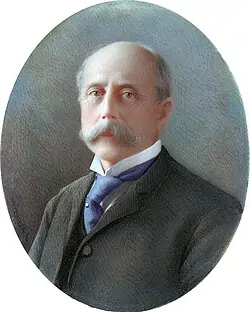
For 30 years, the Liberty Head Nickel, designed by Chief Engraver Charles E. Barber, circulated across America. However, by 1908, the design had reached the 25-year minimum required for redesign under the Mint Act of September 26, 1890.
President Theodore Roosevelt had already launched his campaign to beautify American coinage. He collaborated with Augustus Saint-Gaudens and ushered in what historians now call the American coinage renaissance.
Meanwhile, Barber’s influence declined. Outside artists such as Victor David Brenner, Bela Lyon Pratt, and Saint-Gaudens reshaped U.S. coin design in the early 20th century.
Barber attempted to redesign the nickel between 1909 and 1910. He proposed a military portrait of George Washington. Treasury officials rejected the concept. Next, they considered Abraham Lincoln. However, the Lincoln cent had debuted in 1909, making a Lincoln nickel redundant.
At that moment, a new artist entered the picture.
Sculptor James Earle Fraser Takes the Lead
James Earle Fraser had studied under Augustus Saint-Gaudens and brought strong artistic credentials. On June 13, 1911, Fraser wrote to Mint Director George E. Roberts offering to prepare sketches for a Lincoln nickel.
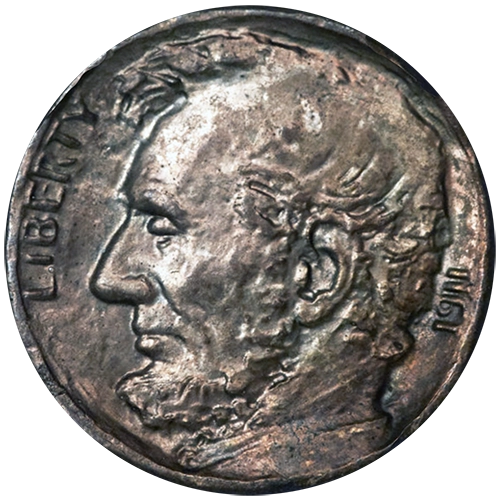
By July 1911, Fraser sent electrotype models to the Treasury. Soon afterward, officials abandoned the Lincoln concept. Instead, they favored a distinctly American theme.
Fraser proposed a Native American portrait on the obverse and an American bison on the reverse.
The Treasury considered holding a public design competition. However, Fraser advised against it. He warned that compromise would weaken artistic goals. Treasury officials agreed. They allowed Fraser to proceed.
During 1911 and 1912, Fraser refined his design. Chief Engraver Charles E. Barber adapted the models for production.
Vending Machine Opposition and Final Approval
In July 1912, controversy erupted. The vending machine industry depended heavily on the five-cent piece. Clarence W. Hobbs, a vending machine manufacturer, led a campaign against the redesign.
He sent letters, threatened legal action, and then appealed directly to Treasury officials.
Nevertheless, the Mint moved forward.
On February 17, 1913, the first Buffalo Nickels were struck at the Philadelphia Mint.
That same year, Fraser married sculptor Laura Gardin Fraser.
Native American Imagery in U.S. Coinage
Native American imagery appeared on U.S. coins long before 1913. However, earlier designs portrayed Liberty wearing a headdress.
James Barton Longacre created the Indian Head cent and Indian Princess gold coins. Saint-Gaudens used similar symbolism on the 1907 $10 gold eagle.
Then, in 1908, Bela Lyon Pratt introduced realistic Native American portraits on the quarter eagle and half eagle.
Fraser followed that tradition. He claimed the obverse portrait combined features of three Native American chiefs who had posed for him years earlier.
The reverse bison likely modeled Black Diamond, a resident of New York City’s Central Park Menagerie in 1911.
First Distribution Ceremony
On March 4, 1913, officials presented coins from the first circulating bag to outgoing President William H. Taft and 33 Native American chiefs.

The ceremony took place at the groundbreaking for the National Memorial to the North American Indian at Fort Wadsworth, New York.
Simultaneously, the Mint released the coins into circulation.
Production totals for 1913 Type 1:
- Philadelphia: 30,992,000
- Denver: 5,337,000
- San Francisco: 2,105,000
- Proof (Philadelphia): 1,520
The San Francisco issue represents the lowest mintage of the type.
Immediate Wear Problems
Type 1 Buffalo Nickels feature textured fields and a raised mound beneath the bison. The denomination FIVE CENTS appears in relief on that mound.
Almost immediately, collectors and merchants noticed heavy wear. By April 1913, circulation pieces showed significant flattening.
Clarence Hobbs had predicted this issue. He argued that the shallow relief, only .003 inches deep, would erase the denomination quickly.
The Mint acted swiftly.
Barber removed the raised mound and recessed the denomination into an exergue. This modification created the Type 2 Buffalo Nickel later in 1913.
However, Barber also softened many fine details. He reduced the granularity of the portrait and bison. Critics argue that these changes diminished Fraser’s original artistic vision.
1913 Buffalo Nickel Type 1 Design Details

Obverse: A right-facing Native American portrait dominates the obverse. The figure wears two feathers braided over the right ear. The date appears raised on the shoulder.
An incuse “F” below the date represents Fraser’s signature.
The inscription LIBERTY arcs inside the rim to the right.
Reverse: A full-length American bison stands facing left. The animal stands on a raised mound.
UNITED STATES OF AMERICA and E PLURIBUS UNUM appear above. FIVE CENTS appears in relief below.
Edge: The edge remains plain, without reeding or lettering.
1913 Type 1 Buffalo Nickel Specifications
- Years of Issue: 1913 (Type 1 only)
- Mintage (Highest): 30,992,000 (Philadelphia)
- Mintage (Lowest): 2,105,000 (1913-S)
- Proof Mintage: 1,520
- Alloy: 75% copper, 25% nickel
- Weight: 5.0 grams
- Diameter: 21.2 mm
- Edge: Plain
- Designer (Obverse & Reverse): James Earle Fraser
Why Collect the 1913 Type 1 Buffalo Nickel?
The Type 1 Buffalo Nickel represents:
- A short-lived subtype struck only in early 1913
- A high-relief artistic design
- A key transitional moment in U.S. Mint history
- The beginning of one of America’s most beloved coin series
Because of rapid wear, high-grade examples remain scarce. Proof coins command strong premiums. Meanwhile, circulated examples remain accessible for new collectors.
For specialists, the 1913 Type 1 offers historical significance and artistic depth unmatched by many early 20th-century issues.
Additional References
- Q. David Bowers – The Expert’s Guide to Collecting and Investing in Rare Coins
- Q. David Bowers – A Guide Book of Buffalo and Jefferson Nickels
- Walter Breen – Walter Breen’s Complete Encyclopedia of United States Coins
- Ron Guth & Jeff Garrett – United States Coinage: A Study by Type
- Don Taxay – The U.S. Mint and Coinage
- R.S. Yeoman – The Official Red Book: A Guide Book of United States Coins
The post The 1913 Buffalo Nickel Was an American Masterpiece Until the Design Started Wearing Away appeared first on CoinWeek: Rare Coin, Currency, and Bullion News for Collectors.